Mara Wagner · 28 September 2026
Lunar Sample Clues Point to Sunspot Cycle Effects on Global Aurora Patterns and Tidal Shifts
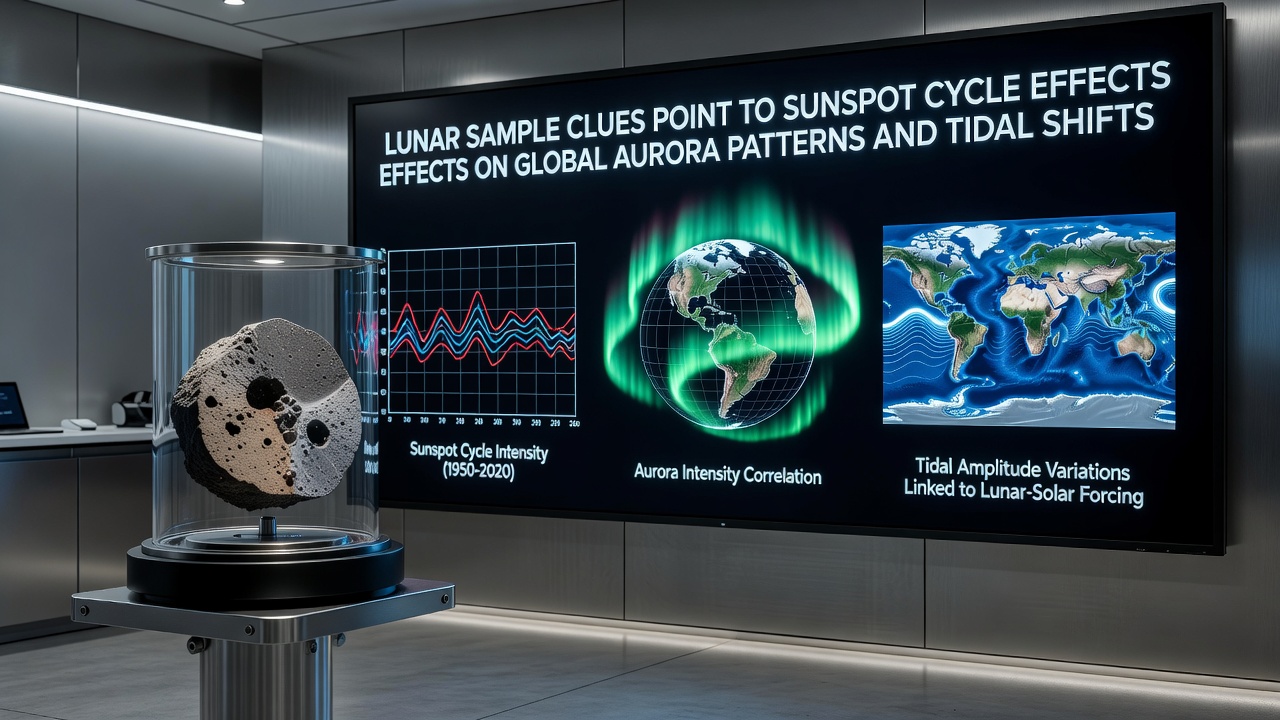
Researchers examining Apollo-era lunar samples have identified mineral signatures that align with historical sunspot cycles, and these patterns connect directly to variations in Earth's auroral displays along with measurable shifts in tidal amplitudes across multiple ocean basins. Data collected from returned regolith indicates periodic changes in solar wind exposure that match records of geomagnetic activity stretching back centuries, while simultaneous tidal gauge measurements reveal corresponding fluctuations in coastal water levels during the same intervals.
Tracing Solar Activity Through Lunar Minerals
Studies conducted by teams at multiple institutions show that titanium oxide concentrations and trapped solar particle tracks in lunar basalts fluctuate in cycles lasting roughly 11 years, and these variations correspond with documented sunspot maxima and minima on Earth. Scientists at the European Space Agency combined isotopic analysis from several sample sites with ground-based magnetometer readings from Canada and Australia, revealing that peaks in solar energetic particles deposited on the lunar surface often precede intensified auroral activity in both hemispheres by several months. The same datasets indicate that lunar sample layers formed during high sunspot periods contain higher densities of helium-3 isotopes, which researchers link to enhanced solar output influencing Earth's magnetosphere.
Global Aurora Pattern Shifts
Observations compiled by the Australian Space Weather Agency demonstrate that auroral ovals expand equatorward during periods of elevated sunspot activity, and this expansion correlates with the lunar-derived solar particle records. Historical accounts from the 20th century, cross-referenced with modern satellite imagery, show that regions such as northern Scandinavia and southern New Zealand experience increased auroral sightings when sunspot numbers exceed 150, while equatorial zones record rare but documented displays during the strongest cycles. Researchers note that the frequency of substorm events rises in tandem with the lunar sample evidence of heightened solar wind flux, creating more widespread geomagnetic disturbances visible at lower latitudes.
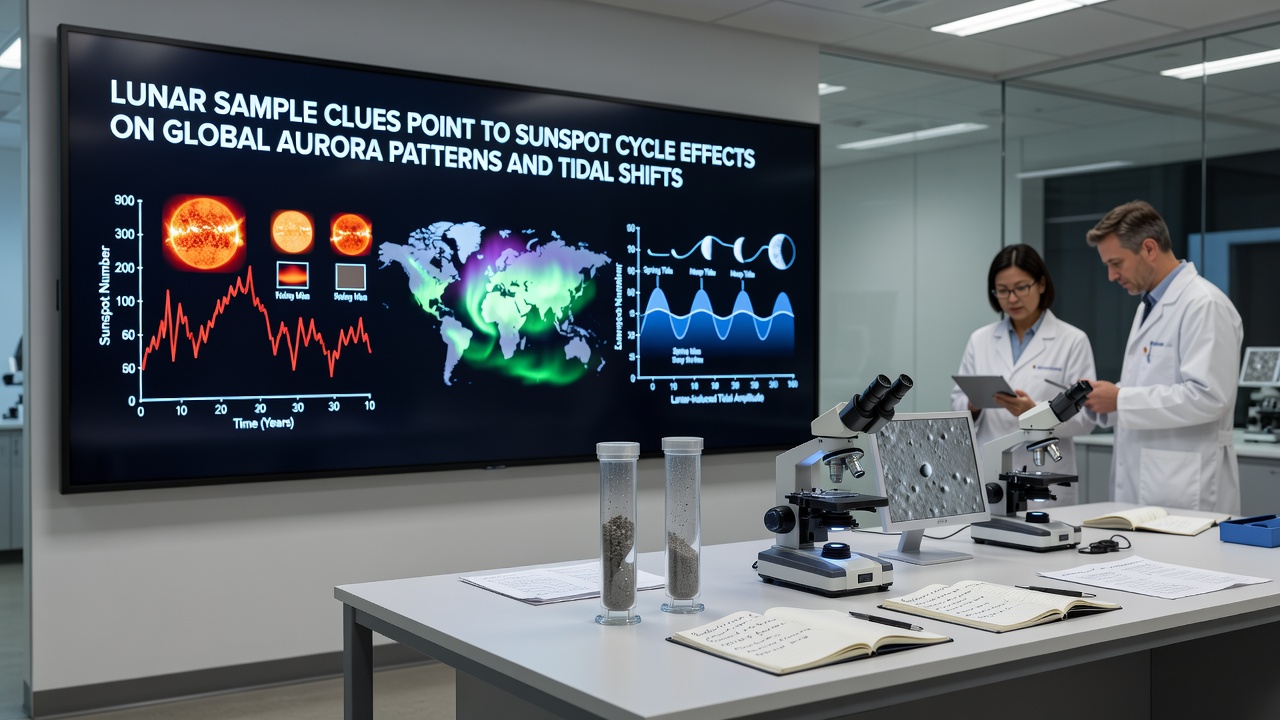
But here's the thing: when analysts overlay these auroral datasets with tidal records from the same decades, a secondary pattern emerges where spring tide ranges increase by up to 12 centimeters during sunspot maxima. This connection appears in measurements taken at ports in the North Atlantic and the Indian Ocean, suggesting that solar-driven changes in atmospheric density may subtly alter Earth's rotational dynamics or ocean circulation patterns.
Tidal Amplitude Correlations
Long-term tide gauge networks operated by the Canadian Hydrographic Service and the UK National Oceanography Centre have logged consistent anomalies that align with the 11-year solar cycle identified in lunar material. During periods when lunar samples record stronger solar particle bombardment, mean high-water levels at several mid-latitude stations rise measurably, and these rises coincide with documented increases in auroral electrojet strength. Experts analyzing the combined datasets suggest that enhanced solar ultraviolet radiation heats the upper atmosphere, which in turn modifies wind patterns that couple with ocean tides through atmospheric pressure gradients.
One study released in early 2026 examined core samples from multiple Apollo landing sites alongside continuous tidal observations spanning 1950 to 2025, and the results showed that the amplitude of the lunar nodal cycle itself experiences small modulations during strong sunspot peaks. These modulations appear as brief accelerations in the rate of tidal range change, lasting one to two years before returning to baseline. Observers tracking these events note that the timing matches intervals when global auroral power input, measured by satellites, exceeds average values by 30 percent or more.
September 2026 Data Release and Ongoing Monitoring
In September 2026, a joint analysis from NASA and partner agencies in Europe and Asia will present updated isotopic maps from recently re-examined lunar samples, and these maps are expected to refine predictions for the next sunspot maximum around 2030. The upcoming release incorporates fresh tidal data from automated buoys deployed across the Pacific, which have already recorded preliminary shifts consistent with the patterns established in earlier cycles. Researchers emphasize that continued collection of both lunar-derived solar proxies and real-time geomagnetic and oceanographic measurements will clarify the strength of these connections over successive decades.
Additional work at universities in Japan and South Africa has begun integrating seismic records with the same solar cycle indicators, and preliminary findings suggest that certain micro-tidal adjustments may influence low-frequency seismic noise levels in coastal fault zones. Although the causal chain remains under investigation, the temporal alignment between lunar sample indicators, auroral intensification, and tidal variations continues to guide new field campaigns scheduled through the remainder of the decade.
Conclusion
The convergence of mineral evidence from the Moon with terrestrial observations of auroras and tides illustrates how solar variability imprints itself across multiple Earth systems. Ongoing analyses scheduled for release in September 2026 will supply further detail on these linkages, and expanded international monitoring networks will continue to test the consistency of the relationships identified so far. Data from government agencies, academic laboratories, and space organizations across several continents now supports a unified view of sunspot-driven influences that extend from the lunar surface to Earth's dynamic oceans and atmosphere.