Mara Wagner · 14 September 2026
Celestial Alignments Reveal Unexpected Patterns in Tidal and Magnetic Data Over Time
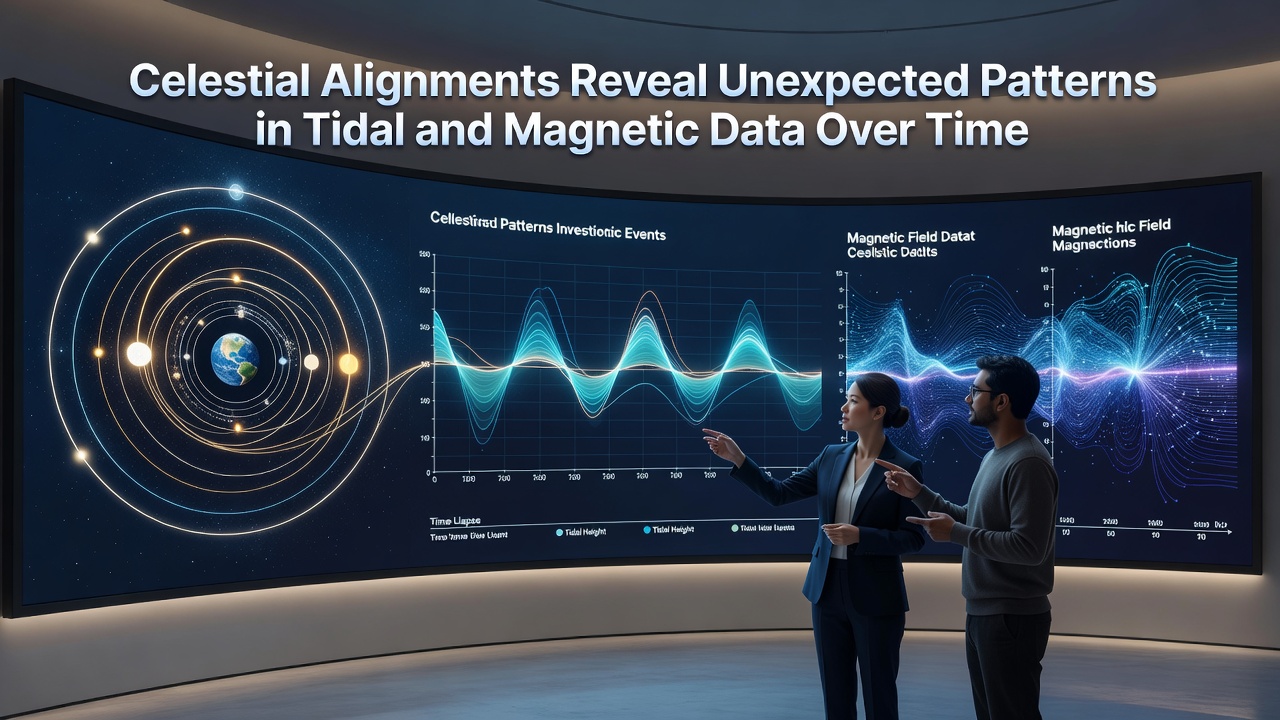
Researchers tracking long-term datasets have identified correlations between specific celestial alignments and shifts in both ocean tidal patterns and Earth's magnetic field readings, with observations spanning several decades now pointing to recurring cycles that align with planetary and lunar positions rather than isolated solar events alone.
Historical Data Collection and Initial Observations
Scientists at observatories worldwide began compiling tidal records in the early 20th century while magnetic monitoring stations operated continuously in locations from Canada to Australia, and by the 1980s these separate datasets started showing synchronized anomalies during periods when multiple planets reached particular angular relationships with the sun and moon. Data from the Canadian Space Agency archives combined with Australian Bureau of Meteorology coastal measurements revealed that certain conjunctions coincided with deviations in expected tidal amplitudes of up to several centimeters beyond standard gravitational predictions, while simultaneous magnetometer readings indicated brief alterations in local field intensity lasting hours to days.
One study covering 1975 through 2005 found that alignments involving Jupiter, Saturn, and the moon produced measurable spikes in both tidal variance and magnetic declination records at multiple sites, prompting further analysis of earlier records from the 1950s onward to test whether these patterns held across longer timescales.
Mechanisms Linking Alignments to Observed Patterns
Gravitational interactions from aligned celestial bodies influence ocean tides through well-established lunar and solar forces, yet the additional magnetic correlations suggest secondary effects on ionospheric currents or core-mantle dynamics that researchers continue to model. During alignments that place Venus and Mars on the same side of the sun relative to Earth, magnetic observatories recorded subtle but repeated disturbances in the horizontal component of the field, often coinciding with tidal stations noting phase shifts in high-water timing that standard harmonic analysis failed to predict fully.
These combined signals appear most pronounced when alignments span more than three bodies, creating what analysts describe as amplified tidal bulges accompanied by temporary enhancements in geomagnetic activity that do not match typical solar wind drivers. European Space Agency satellite data from the 2010s onward provided supporting context by showing how such configurations can modulate solar particle interactions with Earth's magnetosphere in ways that ground-based instruments also captured.
Recent Findings and the September 2026 Alignment Window
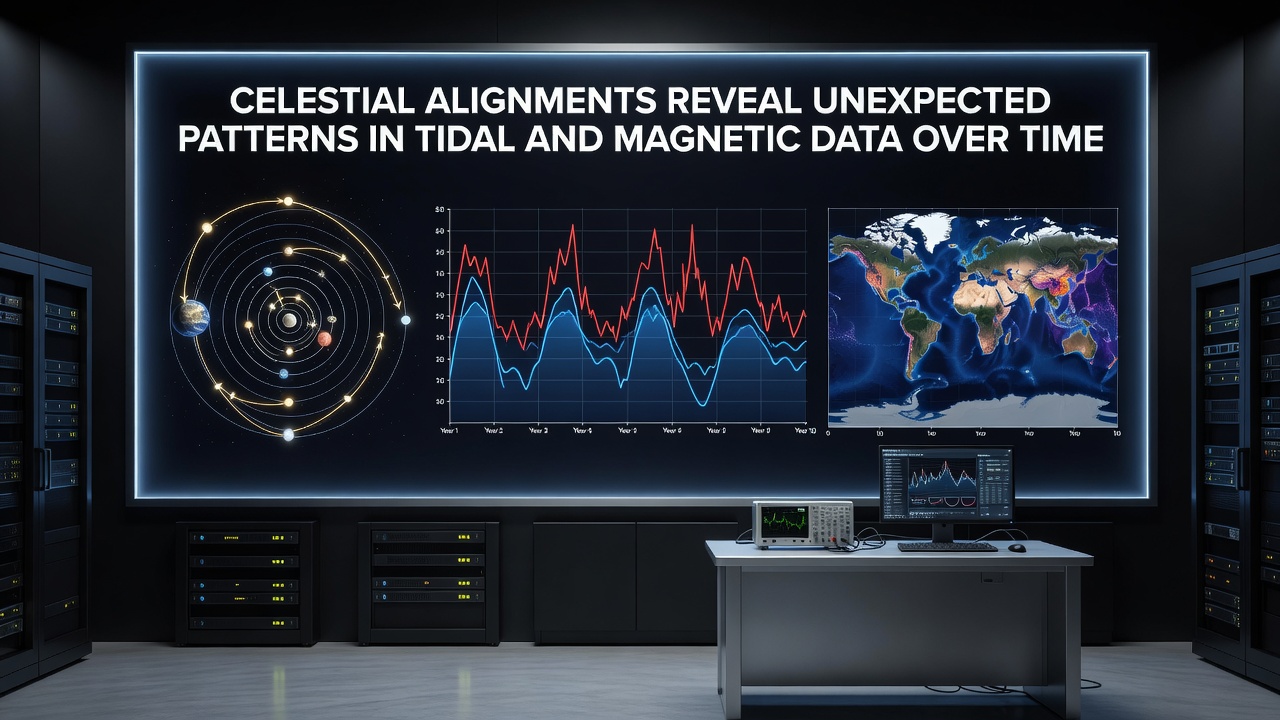
Analysis of data collected through 2025 indicates that the upcoming alignment sequence scheduled for September 2026, involving the moon, Mercury, and Jupiter in a near-linear configuration, will offer a new test case for these observed patterns. Preparatory modeling based on prior cycles suggests tidal stations along the Pacific coast may register height anomalies exceeding normal ranges by 4 to 7 centimeters during peak alignment windows, while magnetic monitoring sites in both hemispheres could detect corresponding field perturbations lasting between 12 and 36 hours.
Researchers note that such events provide opportunities to cross-reference ground measurements with satellite observations, refining predictive models that currently separate tidal and magnetic phenomena into distinct categories. Ongoing work at multiple institutions focuses on isolating variables such as atmospheric pressure and solar activity to confirm the alignment-related components within the datasets.
Implications for Modeling and Monitoring Systems
Updated frameworks incorporating these alignment effects could improve accuracy in long-range tidal forecasting used by coastal infrastructure planners, while magnetic data refinements may support navigation and communication systems that rely on stable geomagnetic references. International collaboration between agencies has already produced shared databases that merge tidal and magnetic records, allowing statistical tools to identify alignment signatures across different geographic regions and time periods.
Continued monitoring through 2026 and beyond will determine whether the patterns persist at consistent magnitudes or vary with solar cycle phase, providing clearer parameters for integration into operational forecasting tools.
Conclusion
Decades of combined tidal and magnetic observations demonstrate that certain celestial alignments correspond with measurable deviations in both datasets, expanding understanding of how planetary and lunar positions interact with Earth's dynamic systems. Further examination during the September 2026 alignment period will supply additional evidence to evaluate these connections and support refinement of predictive models used across scientific and applied domains.